Retouching & image craft
Believable skin: knowing what to leave alone
A practical guide to selective skin retouching: preserve identity, separate texture from tone, control local corrections and judge the final delivery crop.
 By Ed McCulloch ·
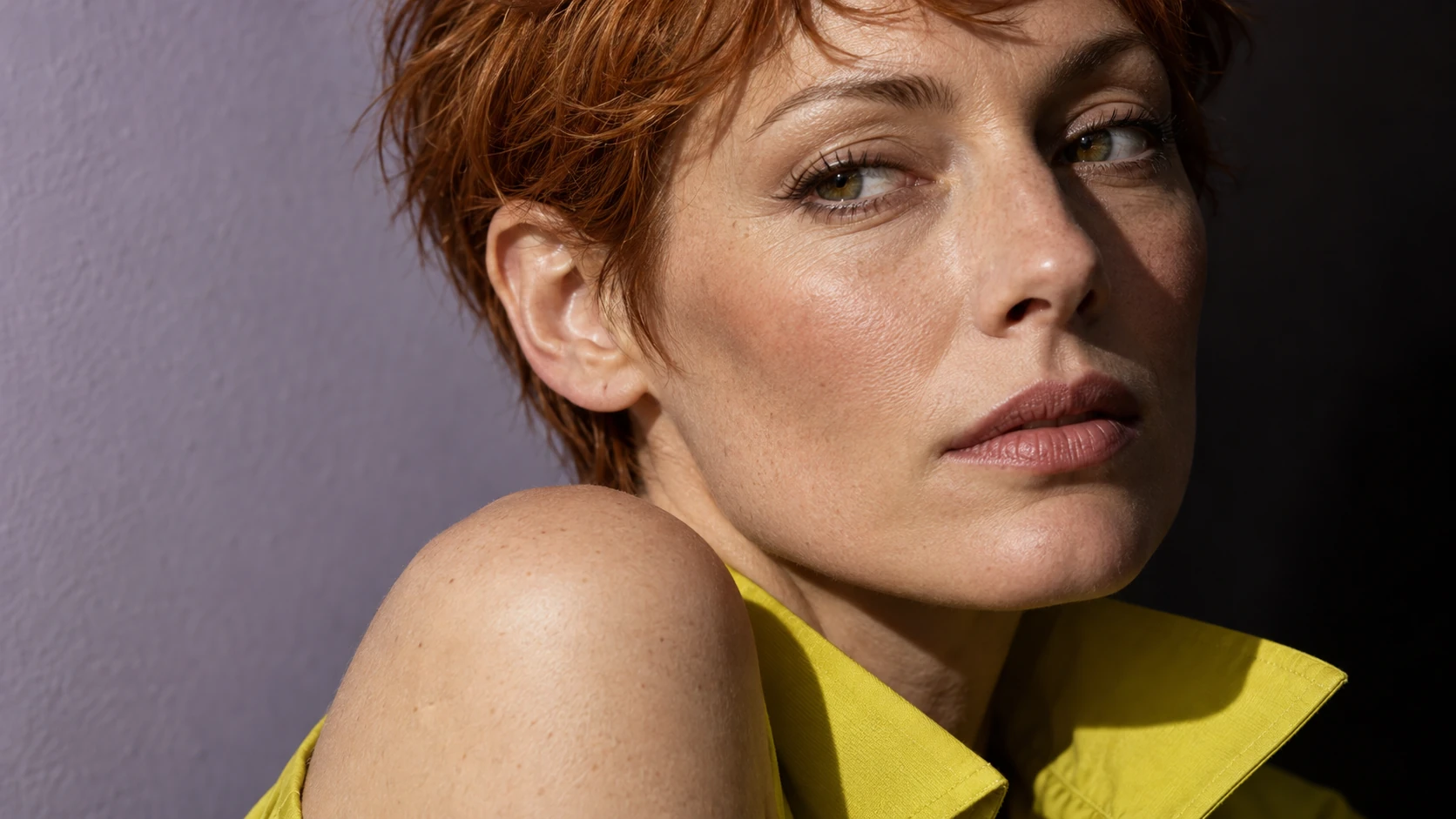
A face can have visible pores and still feel artificial. Flattened cheek transitions, identical sharpness across the frame or a highlight painted over every surface can make detailed skin look unconvincing. More texture will not solve the underlying image.
For a beauty or fashion brief, the useful question is what the finish should preserve. Expression, identity, the direction of light and the character of the photograph need to survive the corrections. That applies to photographed portraits and generated concepts, although the checks are different.
Agree what is allowed to change
Ask for a marked reference and the intended use before starting. An editorial portrait, a cosmetics crop and an ecommerce image may need different finishes. Establish how to handle temporary blemishes, permanent marks, under-eye detail, flyaway hair and makeup edges. A vague request for flawless skin leaves too many decisions unresolved.
Keep a source reference available throughout review. For a real person, preserve their features, age and defining marks unless an explicit brief says otherwise. For a synthetic subject, check that facial structure, eyelids, ears and hairlines are coherent before spending time on surface detail.
Separate the problem from the technique
Identify whether the distraction is a texture defect, a local colour patch, a tonal interruption or an error in shape. Treat the smallest relevant area. A repeated texture stamp needs a different correction from a bright patch that interrupts the cheek's form.
Masked adjustment layers can keep local colour and tonal changes editable. Selective lightening and darkening can refine uneven transitions, but the original lighting still needs to make sense. Avoid removing every shadow beneath an eye or beside the nose: those shadows help describe a three-dimensional face.
Let different surfaces behave differently
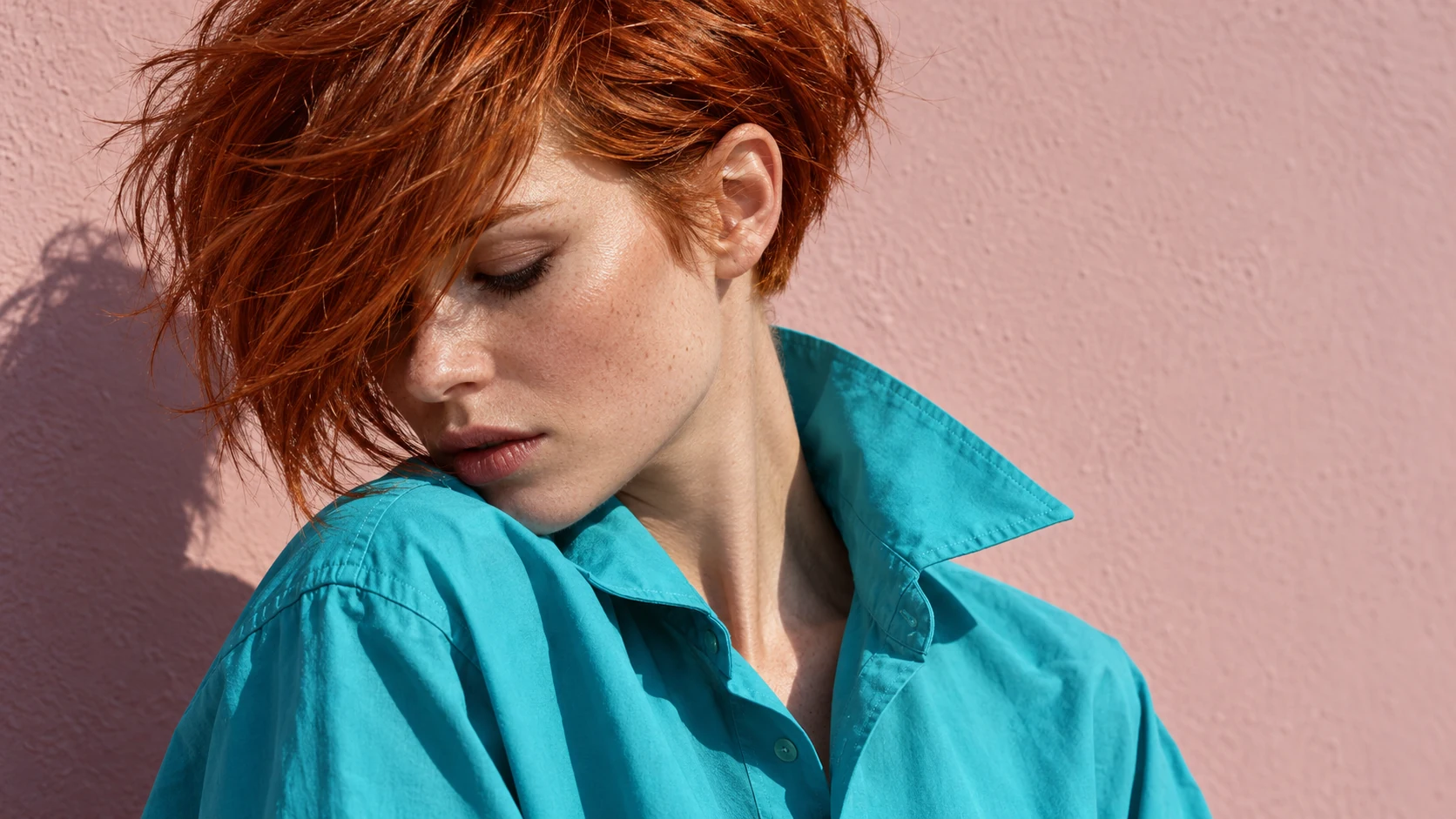
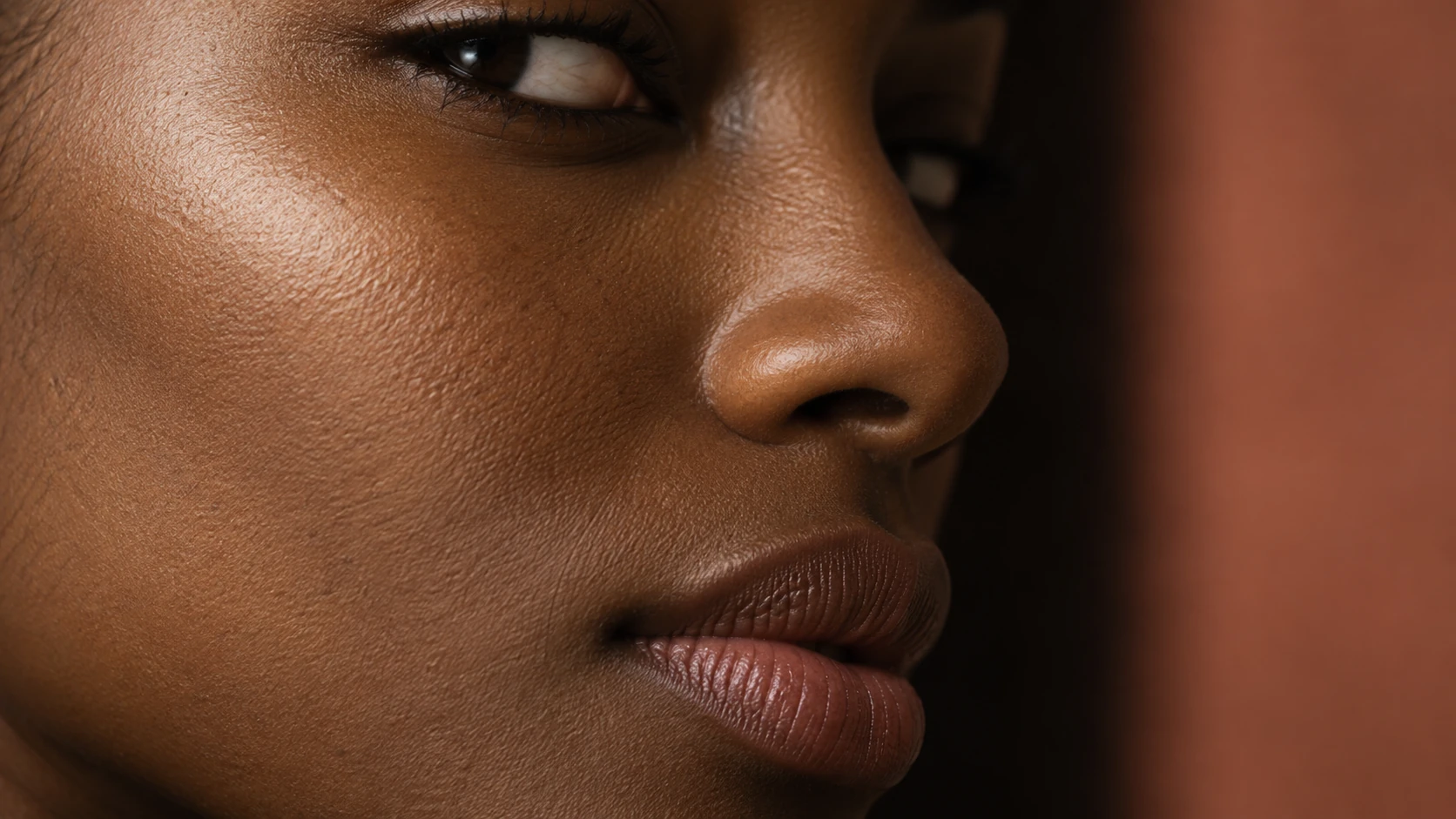
A cheek, lower lip, eyelid and cotton collar should not share one identical finish. Study where the light catches each surface, where fine detail falls away and where an edge needs to remain precise. Keep a small cheek highlight local rather than spreading shine across the whole face.
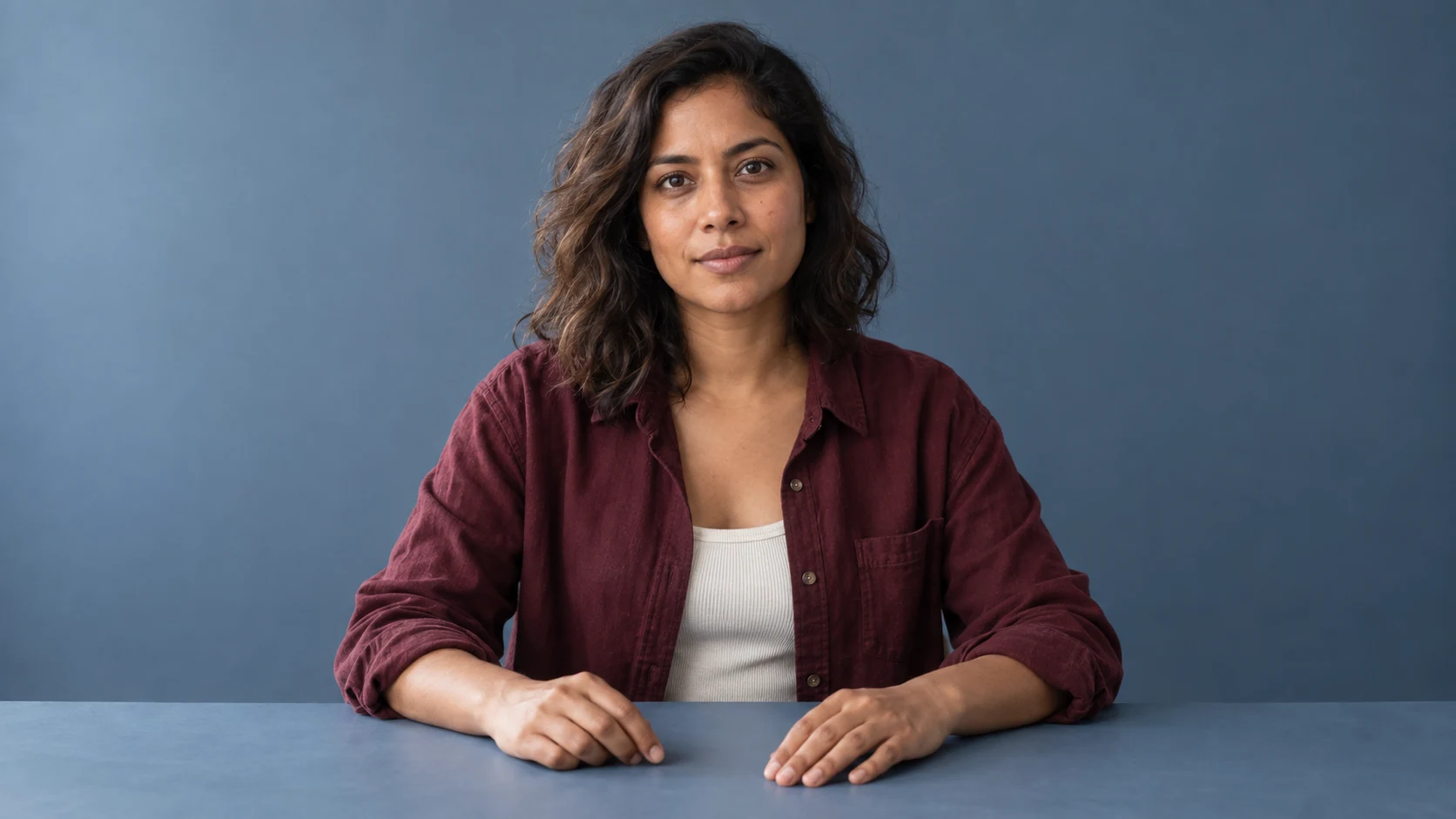
The portrait and detail study here are original AI-generated illustrations. They invite inspection of those relationships; they are not photographs of a real model, a matched pair or evidence of a completed retouch. Separate generations cannot demonstrate an authentic before-and-after repair.
Review at two useful scales
First view the complete image at its intended display size. Does the expression hold? Is the eye drawn to the subject rather than a bright patch of skin? Does the face still belong in the same lighting as the neck, hands and wardrobe? Resolve those larger relationships before chasing isolated pixels.
Then inspect at 100% for repeated texture, abrupt mask boundaries, damaged lashes, doubled edges and inconsistent grain. Return to the complete frame after each correction. A close-up can encourage excessive cleanup that makes the finished portrait less interesting.
Approve the actual delivery crop
Check the resized export as well as the working file. A tight crop can expose a repair that was invisible in the full image; sharpening can make a previously quiet patch draw attention. Review the agreed formats with consistent colour handling and clear version names.
A useful handover explains what changed, what stayed intact and which decisions need approval. Retain editable corrections where the brief requires them. The standard is a convincing image that supports the person and the campaign, with enough restraint to leave its character intact.