AI fashion & art direction
AI fashion direction: give the body something to do
Build stronger AI fashion images by directing a specific action, a distinctive garment silhouette and believable contact before generation.
 By Ed McCulloch ·
A fashion image can have convincing skin, detailed cloth and an attractive grade, yet still feel anonymous. Often the missing decision is what the person is doing. A model standing in an interesting outfit gives the image a subject; a specific action gives the body and garment a relationship.
For brands commissioning AI fashion imagery, that relationship belongs in the direction before generation. What carries the weight? Where does a hand touch the cloth? Which part of the silhouette should hold your attention? Those questions can improve the frame more than another instruction to make it cinematic.
Write an action you could direct on set
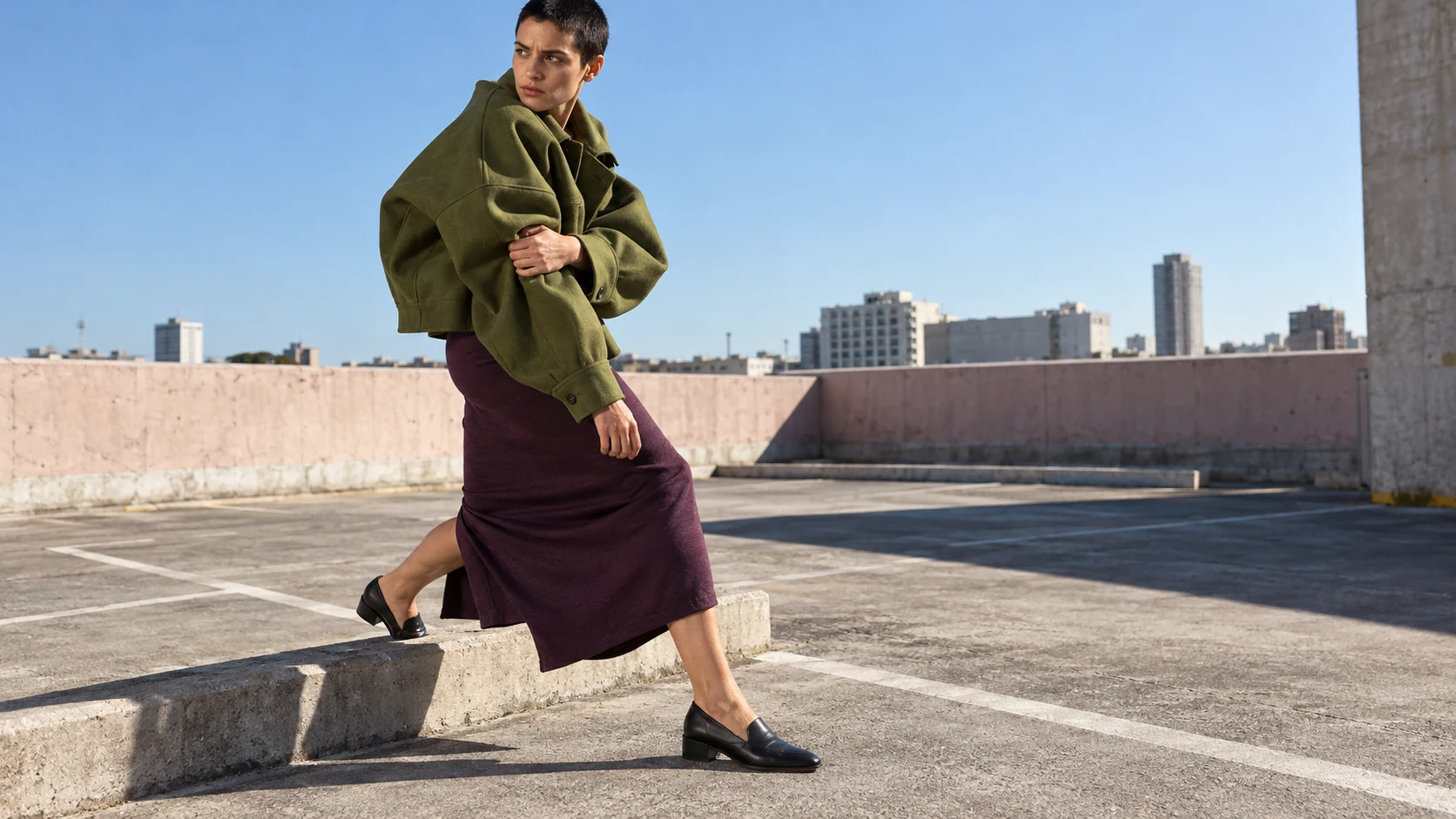
Replace vague pose instructions with an observable moment: stepping across an obstacle, drawing a sleeve towards the body, or turning to look at someone outside the frame. Choose one principal action. Adding a walk, a twist, a jump and an elaborate hand gesture together makes the body harder to read.
Specify where the weight sits and where the attention goes. A planted foot and a backward glance suggest a different moment from two evenly weighted feet and direct eye contact. The direction should still make sense if you remove the lighting and camera adjectives.
Let the garment help choose the gesture
Decide which property deserves emphasis: a broad shoulder, a heavy sleeve, a stiff hem or a narrow waist. Then choose an action that reveals it. A heavy jacket can make a compact arm movement feel substantial; a light skirt may need room around the body to describe its movement.
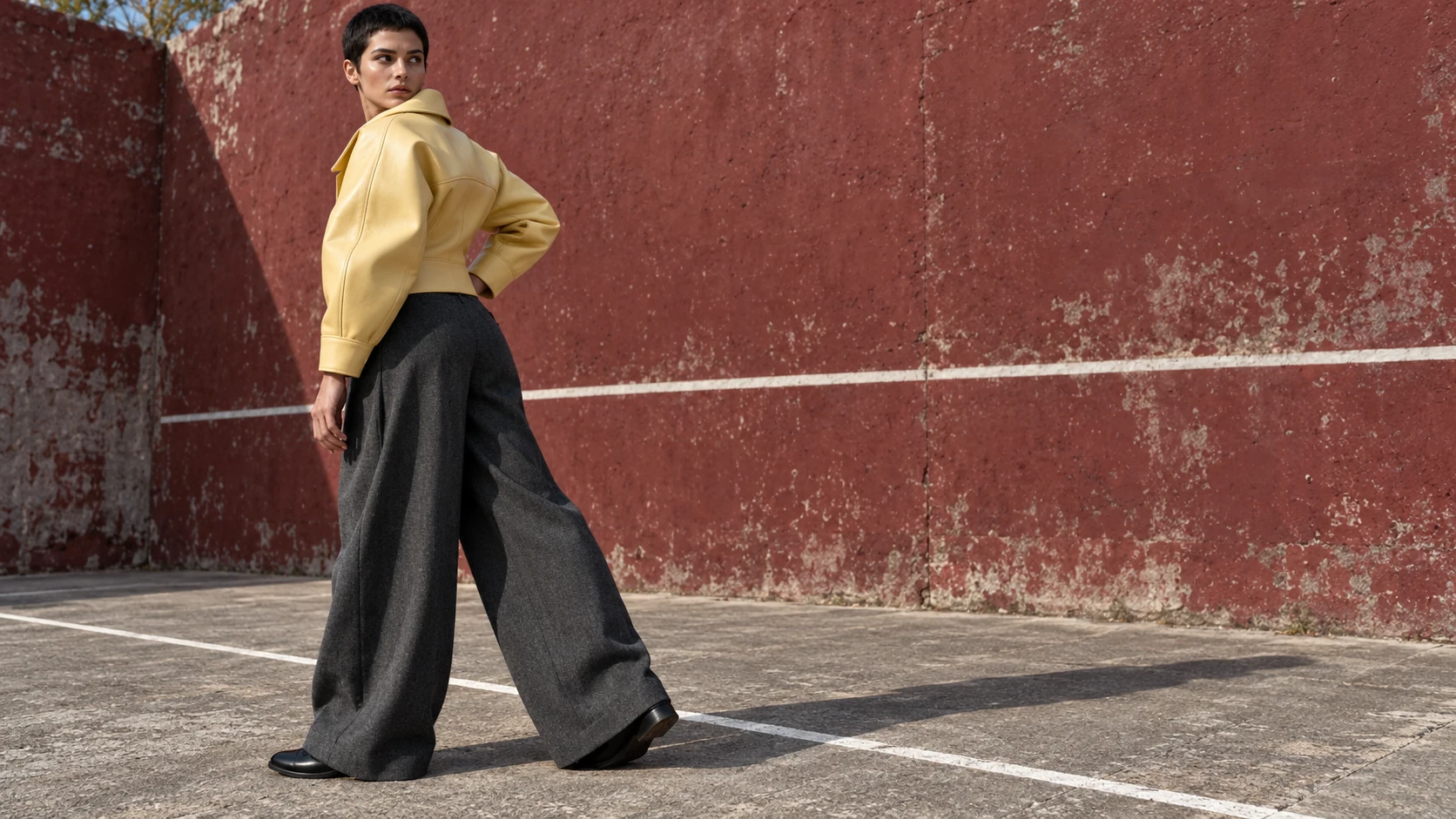
In the green-jacket concept, the curved sleeves are the leading shape. The grip gives one sleeve a point of compression while the step changes the body's angle. For an actual collection, the approved garment's construction must lead these choices. Do not invent volume or change a cut simply because it produces a stronger picture.
Contact should leave visible evidence
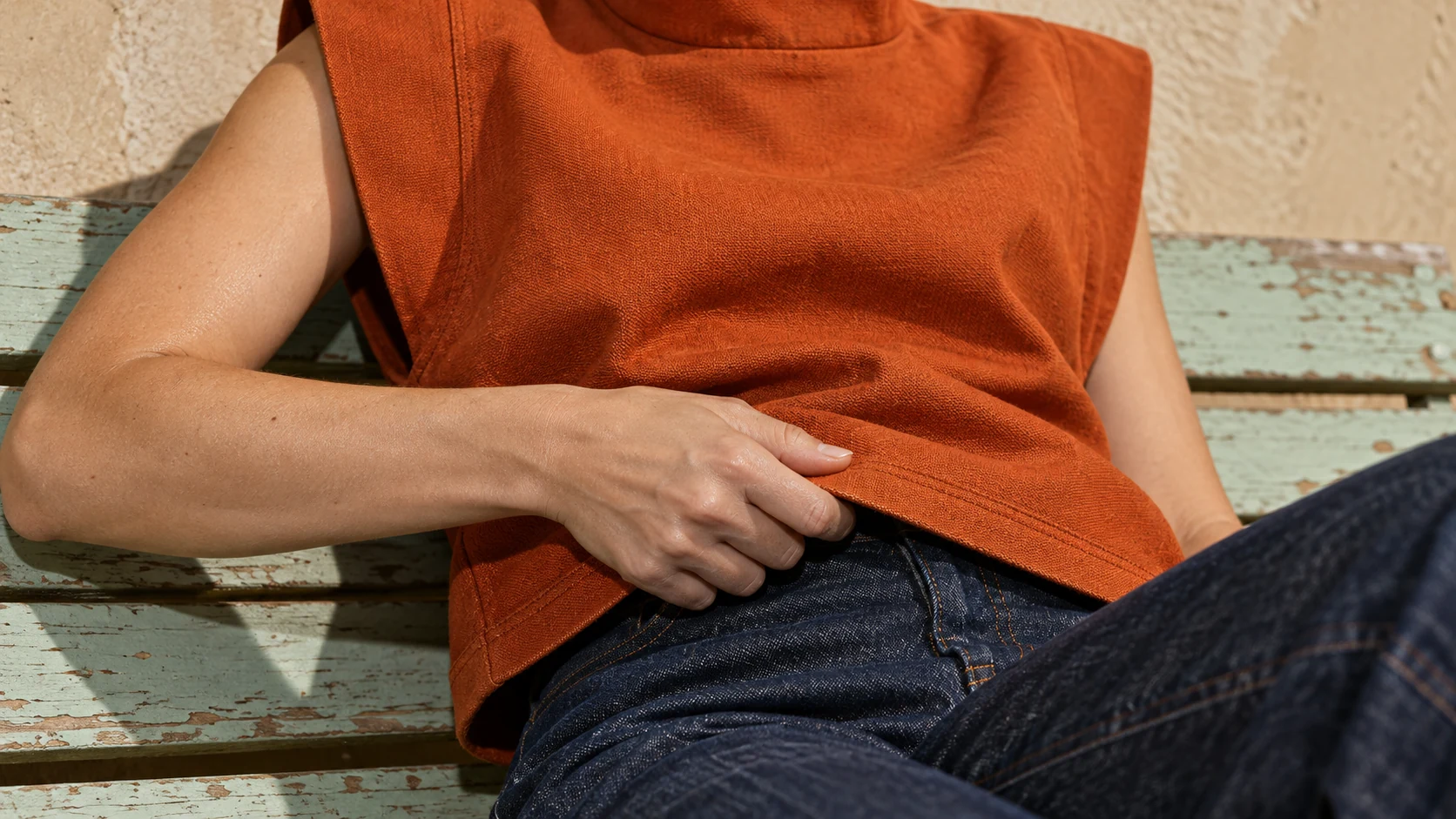
A hand resting on cloth should have a reason to be there. Look for an edge that bends, a local compression, a shadow between surfaces or folds travelling away from the contact. These small consequences connect the gesture to the material.
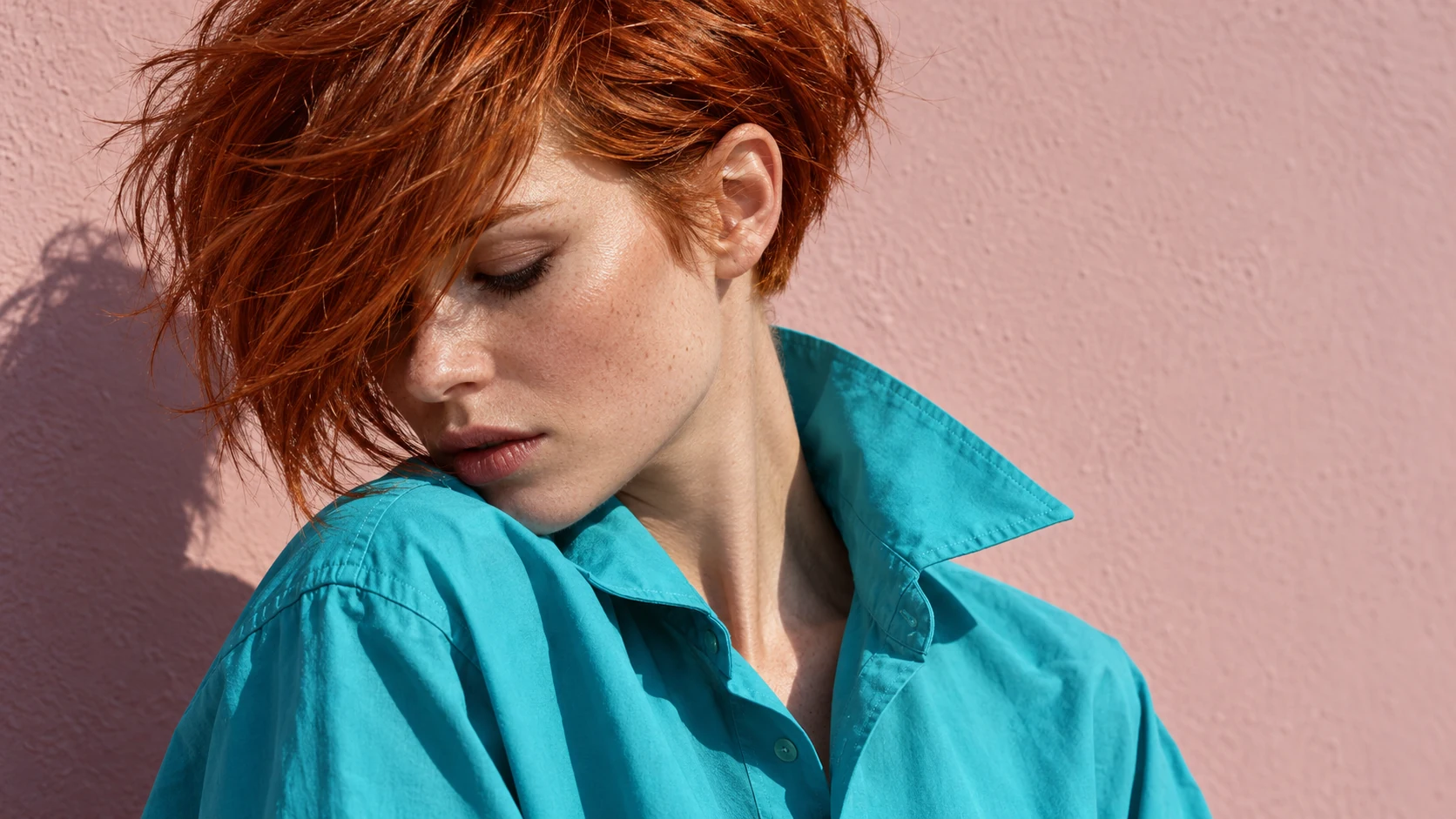
The orange-canvas insert isolates that decision. Fingers meet a turned hem, the fabric lifts locally, and the heavier folds remain below. It is a separate illustrative concept, not the same outfit, a continuity test or a before-and-after repair. Judge the contact first, then the weave: detailed texture cannot explain a hand that merges into the garment.
Frame the consequence of the action
Choose the crop around the information the viewer needs. A wider frame can establish the planted foot and the obstacle. A close insert can explain a hem and fingertip contact. Cropping away every support point may create ambiguity; showing the whole location can make the useful gesture too small.
Review a small thumbnail before inspecting fine detail. Does the sleeve separate from the torso? Can you read the direction of the body? If the frame feels ordinary at that size, reconsider viewpoint, silhouette or timing before adding grain or stronger contrast.
Approve the image before expanding the sequence
Review hands, joints, seams, contact and shadow direction against the intended action. A small synthesis defect may be repairable; a confused weight shift or redesigned garment may justify another generation. Keep the approved source and distinguish a correction from a change in creative direction.
If the still will become a film, define the action's beginning and end before extending it. Identify what the edit must show and which garment details must remain stable. A strong still is a useful direction plate, but only playback can establish whether the movement, continuity and eventual cut work together.