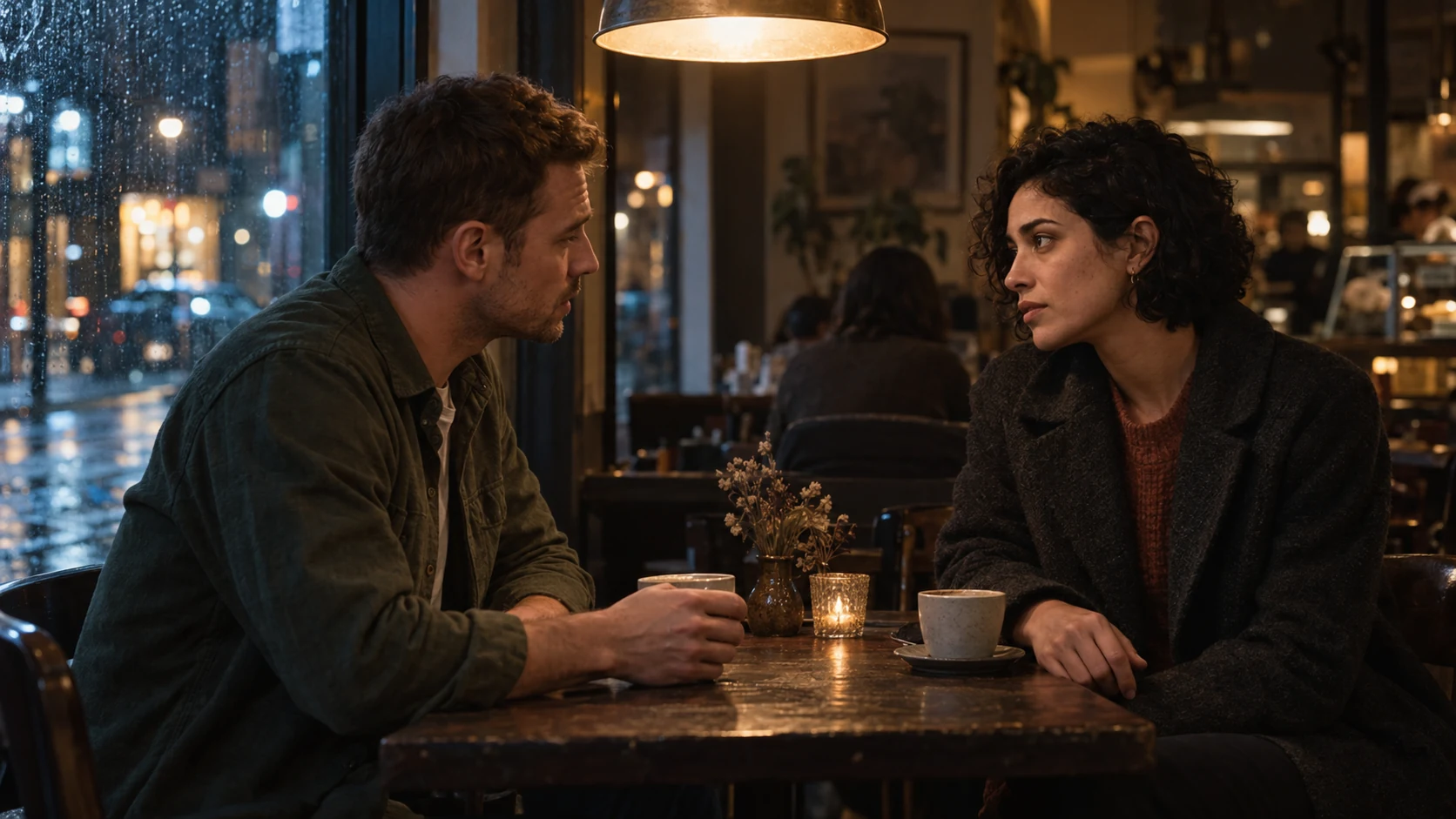
Cinematography & AI
AI cinematography: what real lighting and camera choices bring to a shot
Two scenes, four viewpoints. How lighting direction, camera position and lens choices help AI filmmakers create more convincing images and films.
 By Ed McCulloch ·
“Make it cinematic” leaves a lot undecided. Where is the light coming from? How close are we to the person? What does the camera know that the character does not?
Those questions come from cinematography, and they are just as useful when directing AI imagery. The choices that make a film or advertising shot work—light, camera position, performance and composition—give the generated image a physical and emotional logic.
A camera name in a prompt can suggest a look. It does not replace deciding where the camera stands or what the light does. These two generated scene studies explore those decisions through different viewpoints. The lens and lighting notes describe the intended approach, not equipment used to photograph them.
Start with a light source, not a mood word
A scene becomes easier to direct when the light has a reason to be there. A shop window, an overhead fluorescent or low sun through a kitchen window gives you a starting point for where highlights and shadows should fall.
The apparent size of that source matters. A large source relative to the subject tends to give softer shadow transitions; a small one tends to give harder edges. Distance, diffusion and the surrounding room all change the result. A white wall can return light onto a face. A dark surface can reduce that fill and give the face more shape.
For an AI image, describe the visible consequences: which cheek catches the window, where the far side falls into shadow, and what reflects in the glass. That is more useful than accumulating words such as dramatic, premium or cinematic.
Scene one: a courier pauses in a late-night laundrette
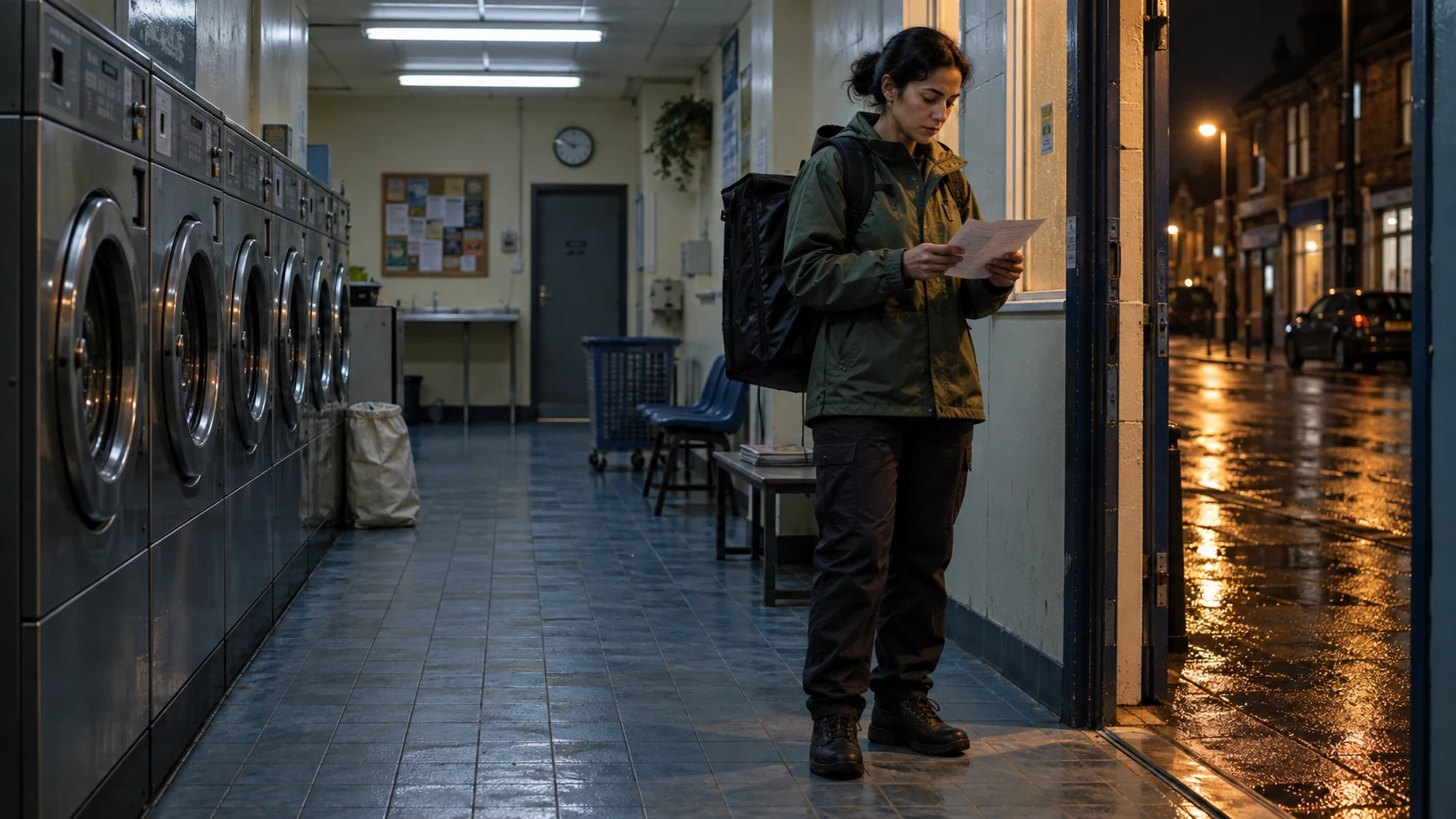
The moment is small: a courier checks a paper address before heading back outside. The laundrette gives us rows of machines, overhead light and a doorway connecting the quiet interior to the street.
The lighting idea uses cool overhead fluorescents as the main source, with warmer street light entering through the doorway. Her olive rain shell should respond differently from skin, paper and the machines’ metal edges. The camera can move, but those sources should stay attached to the building.
- Lighting idea
- Cool overhead practicals; a weaker warm source at the entrance. Keep the shadow side of the face readable without lighting it separately from the room.
- Camera A
- Eye-level environmental frame; approximately 35mm full-frame-equivalent field of view. Stand back enough to include the machines and the exit.
- Focus idea
- Keep the courier, paper and nearby machines readable. Let distance soften the far end of the room.
Move lower and closer: the same moment changes
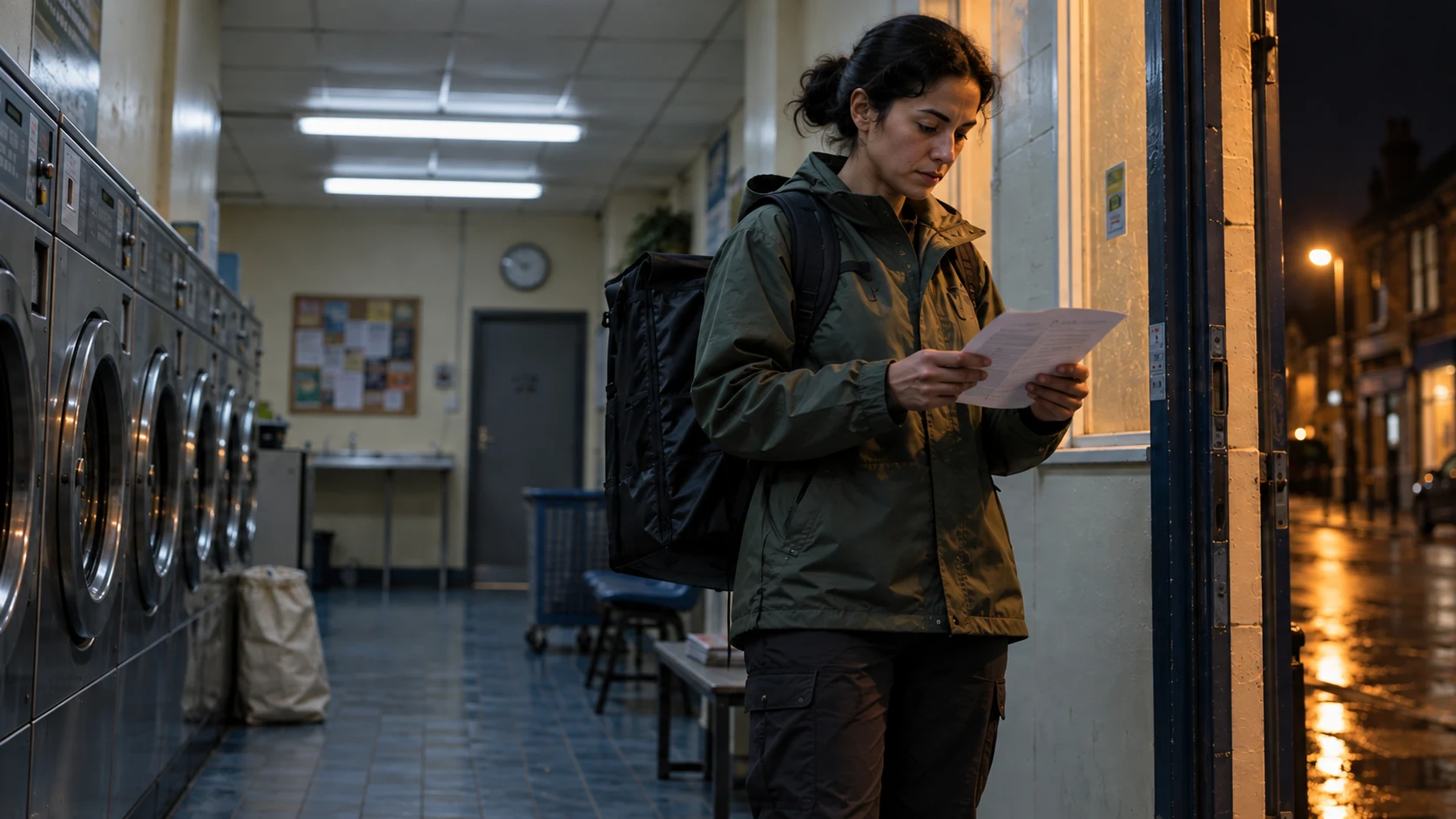
The wider frame lets us read the situation. The second angle brings us closer to the courier’s attention, using a lower three-quarter position and an approximately 50mm-equivalent field of view.
A foreground edge can give the camera a place within the room. The paper and face become more important, while the laundrette becomes context. It is a change in emphasis, not a reason to turn the scene into a different location.
For coverage that will cut together, check the same jacket, address paper, hand position and direction of attention. The generated studies are examples of a camera brief, not a calibrated reconstruction: any drifting machine layout or light direction would need resolving before treating them as finished film coverage.
- Camera B
- Lower three-quarter viewpoint, nearer the subject; approximately 50mm full-frame-equivalent framing.
- Keep fixed
- Identity, wardrobe, action, room layout and physical light positions.
- What changes
- The amount of environment, the visible face angle and the relationship between foreground and subject.
Scene two: a morning product moment
Advertising often needs the image to do two things at once: feel like a believable moment and make the product easy to understand.
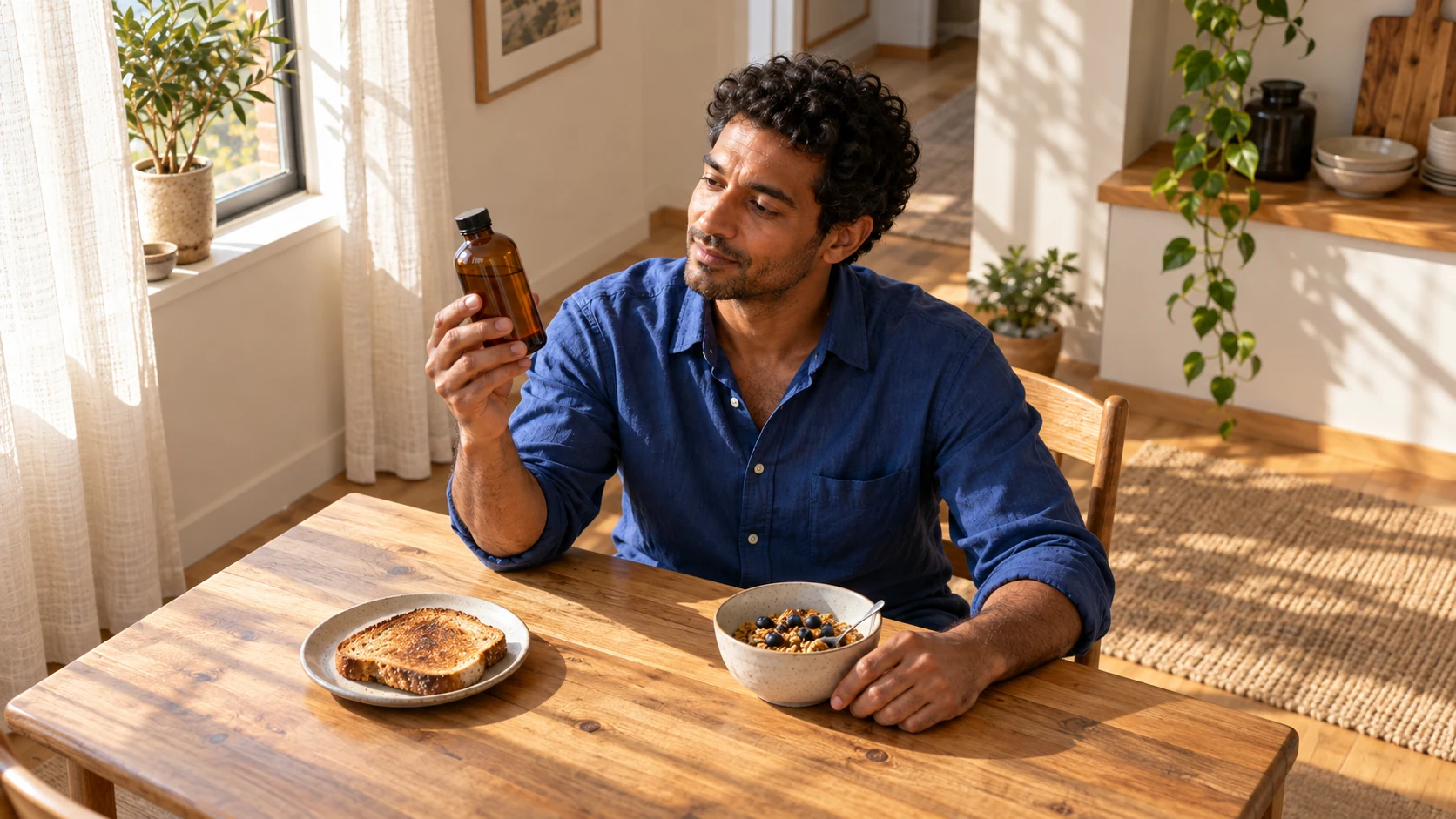
Here, a man in a cobalt shirt sits at a breakfast table with an unbranded amber bottle. Low morning sunlight enters through a window beside the table. Part of the light passes through a curtain; the cream walls return a softer fill into the room.
The bottle needs enough separation to read without becoming a glowing object that belongs to a different scene. Look at how the hand wraps around it, where the glass catches the window and how the table receives its shadow.
- Lighting idea
- Low morning sun from the window; a curtain softens part of the source, with gentle room bounce.
- Camera A
- Seated eye-level, approximately 50mm full-frame-equivalent. Make the face, grip and bottle the main relationship.
- Focus idea
- Keep the bottle and hand legible. A soft background should not hide the action the advertisement depends on.

Look down into the scene: a different advertising use
An elevated diagonal angle gives the tabletop more importance. With a wider, approximately 35mm-equivalent view, the image can reveal the product in relation to breakfast, clothing and the surrounding space.
That might suit a layout where the arrangement matters more than a portrait. It also gives a compositor different practical problems: the bottle’s top becomes more visible, its silhouette changes, and the surface behind it is different.
The window stays where it is in the room. “Camera-left light” only describes one viewpoint; after moving the camera, the same window may sit in a different part of the frame. Describe its physical position rather than asking the light to follow the lens.
- Camera B
- Elevated diagonal viewpoint, looking down across the table; approximately 35mm full-frame-equivalent.
- Keep fixed
- The person, blue shirt, bottle, table setting and window position.
- What changes
- Product silhouette, foreground proportions, visible tabletop and the space available around the subject.
Camera position does more than a camera brand
In a real camera setup, viewpoint determines perspective. Focal length and sensor format determine how much of the scene fits in the frame. If you stand in the same place and change lenses, you change framing; moving closer or further away changes the spatial relationships.
That distinction matters when directing AI. “85mm” is shorthand, not a guarantee of optical accuracy. Describe the result you need as well: a face seen from a comfortable distance, less environment in frame, or a close foreground that feels larger than the objects behind it.
Camera height has its own effect. Eye level can feel conversational. A lower camera can make an ordinary action feel more imposing. A high viewpoint can clarify an arrangement or make someone feel observed. None is automatically more cinematic. Choose the relationship the story needs.
Use the same thinking when the image moves
A still can hide problems that a moving shot reveals. Once the camera travels, the background should reveal itself plausibly, reflections should respond to the new view, and the person’s contact with the scene should remain stable.
Keep a camera move purposeful. A small push towards a reaction can be enough. For an advertising shot, a controlled move might reveal the product or separate it from the background. Movement that does not improve the message can make the work harder to finish without making it better.
For brands choosing an AI filmmaker, this is a useful part of the conversation: why this viewpoint, why this light, and what does the shot need to communicate? A convincing answer should be visible in the image.