Retouching & product imagery
Product retouching: keep the reflections that describe the shape
A practical guide to retouching reflective products: separate distractions from useful reflections, preserve material character and check the final crop.
 By Ed McCulloch ·
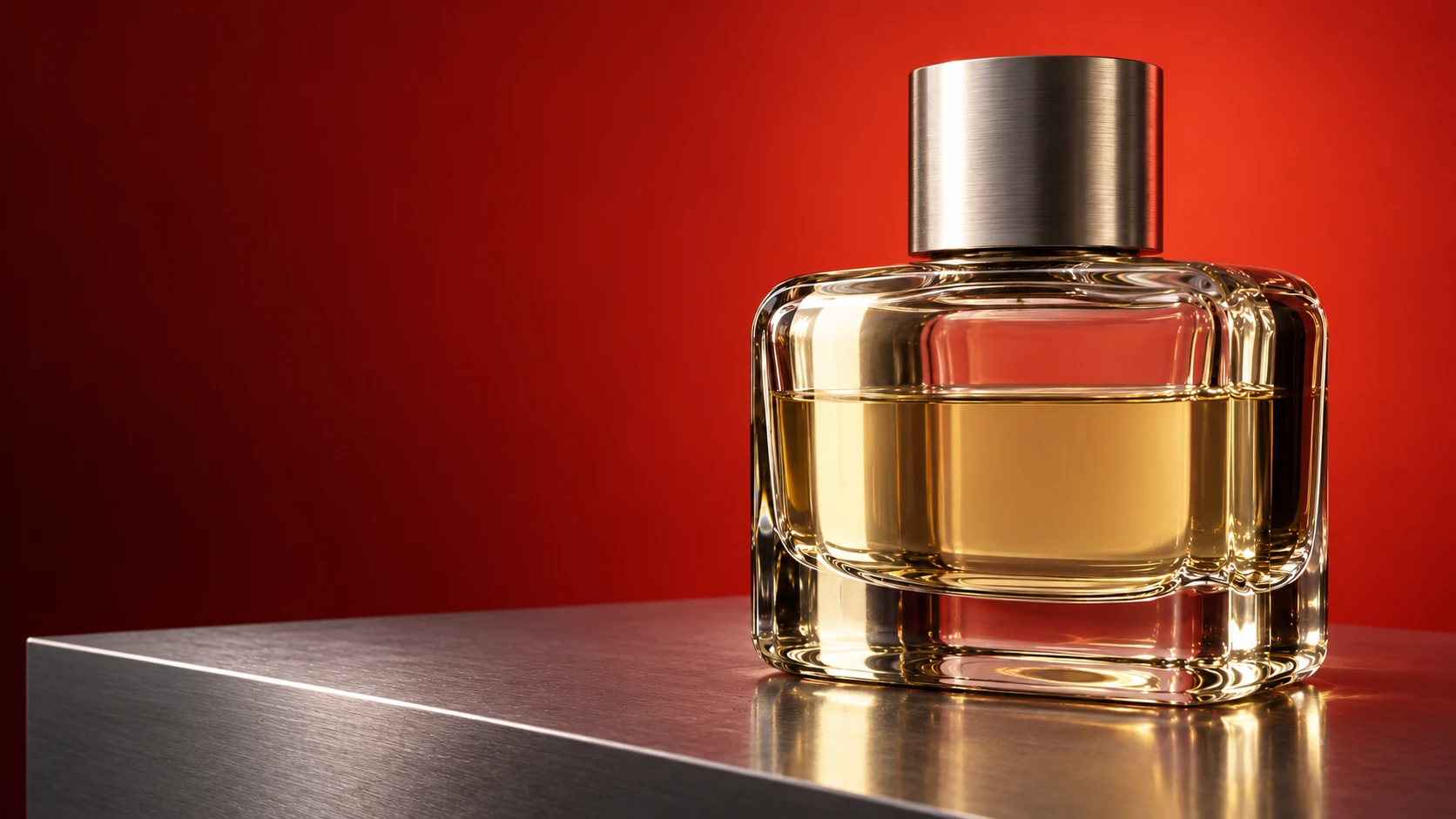
A polished product can become less convincing as the retouch gets cleaner. Remove every bright stripe, dark patch and trace of its surroundings, and a glass perfume bottle can lose its thickness while a metal cap starts to look like plastic. The outline remains, but the volume has gone.
The useful question is what each reflection contributes. Some distract from the product. Others describe its curve, thickness or place in the scene. Decide which job a reflection is doing before deciding to remove it.
Agree what the image has to preserve
Start with the approved product reference and intended use. Identify the true silhouette, construction, finish, colour and any essential markings. Clear glass, pale liquid and a brushed metal cap need different treatment, even when they belong to one object.
Then agree the level of finish. An isolated ecommerce image and a perfume bottle in a coloured campaign set have different relationships with their surroundings. Removing signs of use may suit the brief; removing the whole lighting environment can undermine the chosen photograph.
Read the reflection before painting over it
In the perfume concept, a broad bright reflection describes the left face and rounds over the glass shoulder, while a darker strip defines the opposing edge. The heavy base refracts the surrounding colour. Those transitions help describe the bottle’s thickness and rounded corners; simplifying them into a uniform highlight would make the glass less convincing.
Separate small surface distractions from broad tonal structure. An isolated speck can be a local cleanup. A large reflected shape may need its own mask and careful tonal adjustment. Treating both with the same broad brush risks flattening the surface or leaving a patch that no longer follows the curve.
Keep glass, liquid and metal distinct
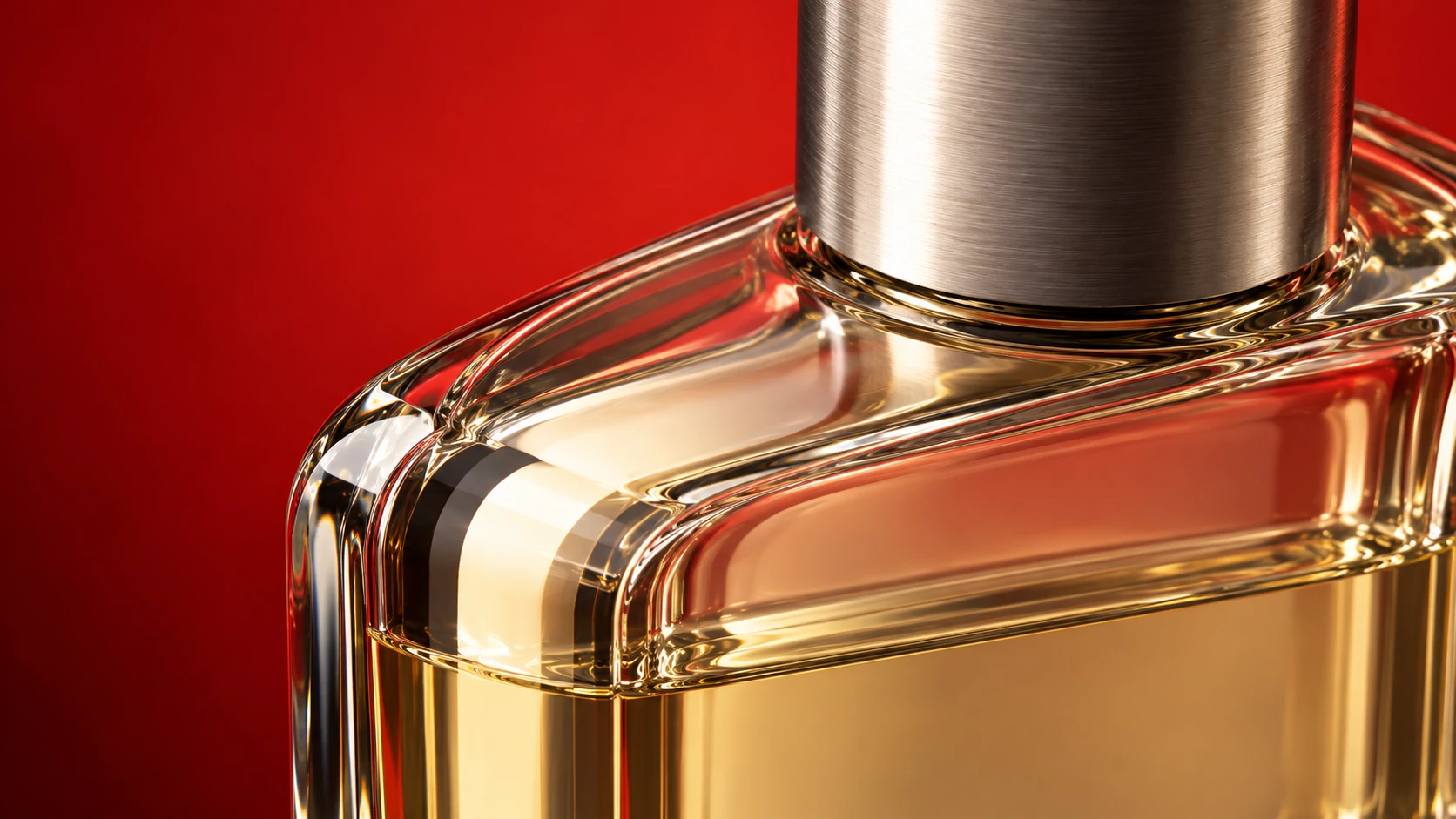
The close study brings three material decisions together. A broad reflection describes the brushed cap, a narrower bright contour defines the glass shoulder, and the liquid has its own boundary. Making those surfaces equally bright or equally smooth would weaken their separation.
Follow those boundaries while correcting a reflection. Preserve the direction of the metal brushing, the dark contour beside a glass highlight and the thickness around the shoulder. Keep broad tonal transitions gradual without blurring a construction edge. These are AI-generated illustrative views, not a physical lighting test or a before-and-after demonstration.
Make the correction easy to compare
Keep an untouched source and separate small cleanup from larger tonal work. Name layers by the decision they contain: surface dust, reflected detail or side-panel tone. That makes feedback more precise and helps prevent one correction from quietly changing another part of the product.
Adobe documents a Sample All Layers option for Photoshop’s Remove tool. With a suitable sampling setup, a separate cleanup layer can keep corrections apart from the source. Check the result after each meaningful change: an automatic removal can produce plausible texture while still changing a seam, reflection or edge that needs to remain accurate.
Judge the delivered image, then return to the detail
Review at the intended crop and display size before returning to a close inspection. Does the product still have weight? Does the cap read separately from the glass? Does the base sit on the plinth? A contact shadow or reflected strip can be important at small size even when it looks untidy in isolation.
For the handover, distinguish cleanup from changes to finish, colour or geometry. If a reflection cannot be repaired convincingly without redesigning the object, flag the need for another source exposure, a reshoot or an approved rebuild. A cleaner file is useful only when it still describes the product truthfully.