Retouching & food imagery
Food retouching: keep the texture that makes it believable
Plan food retouching around material differences: preserve useful crumbs, control highlights and colour locally, and judge texture at the final delivery size.
 By Ed McCulloch ·
A food image can become less convincing as it becomes cleaner. Remove every crumb, smooth every cut surface and give every ingredient the same shine, and the picture starts to lose the differences that made the food interesting.
For brands and agencies commissioning food retouching, agree which qualities need protecting before the cleanup begins. Crisp pastry, soft filling, glazed fruit and ceramic should each retain a different surface response. A polished image still needs something tangible to look at.
Define the food appearance before the finish
Begin with the approved source, styling and intended use. Identify the product’s shape, portion, ingredients, colour and surface character. Decide which marks are distractions and which are part of the food. A darker baked edge and a stray background fibre need different decisions.
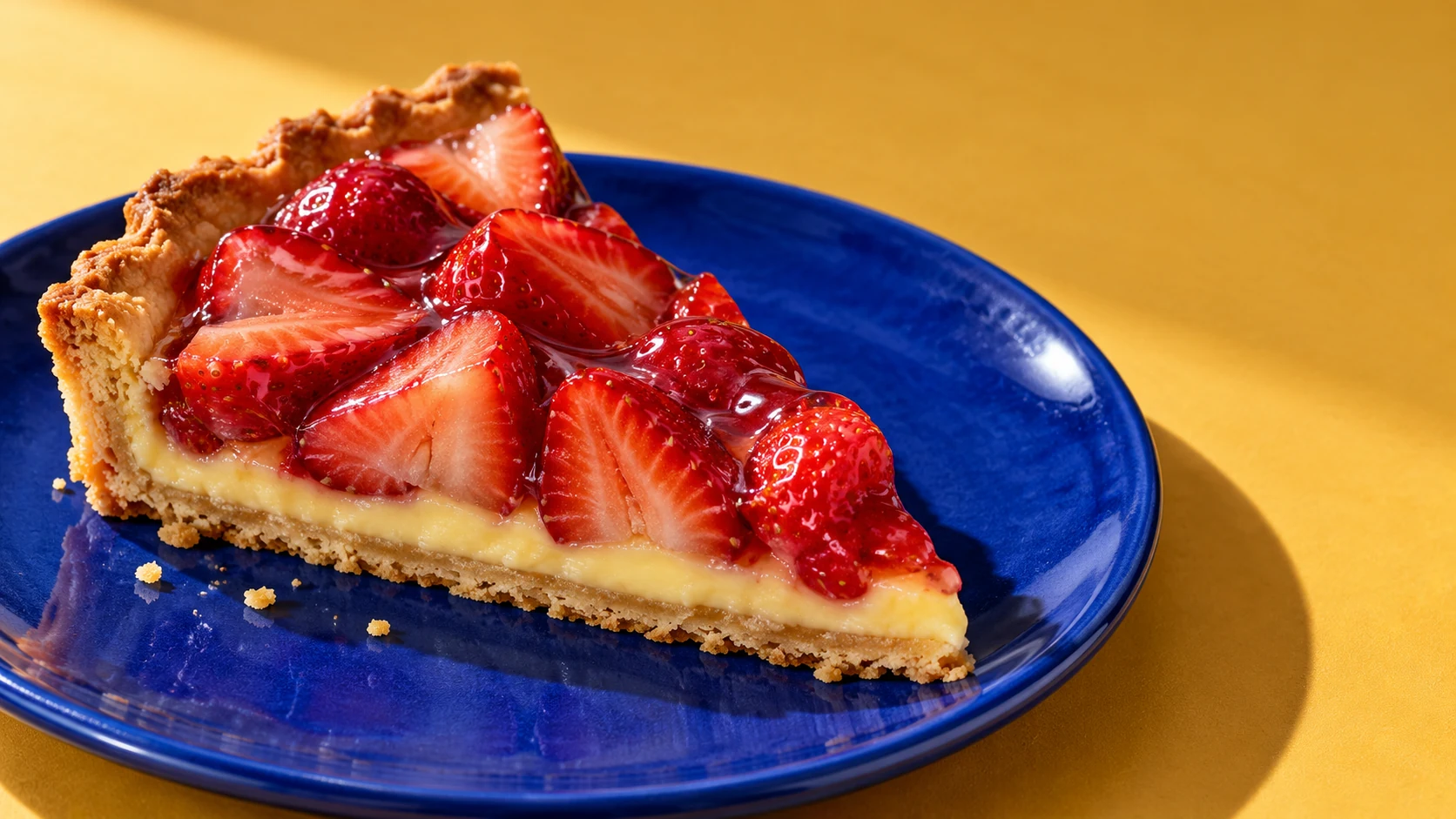
The strawberry-tart illustration is an original AI-generated concept. It places glossy fruit above pale filling and a dry crust on a blue plate. Those differences provide a useful discussion point, but the image is not a real recipe, photographed product reference or demonstration of completed manual retouching. Actual product evidence must lead commercial decisions.
Clean the frame without erasing the material
A crumb near the edge of the layout may compete with a headline. Another beside the pastry may help explain how the crust breaks. Review their position, scale and contrast rather than treating all loose material as a defect. Keep the food’s relationship with its plate or surface believable.
Work locally and preserve the original source. Repeated cloning can create matching fragments, doubled seeds or an unnaturally continuous crust. Check the repaired area in context after inspecting it closely. A technically tidy patch can still interrupt the way the food is shaped or lit.
Protect the difference between dry and glossy
Highlights help distinguish a glaze from a baked surface. Control an isolated bright distraction without making the entire fruit matte. Equally, avoid spreading shine onto pastry or bread just because it makes a small crop look richer. Judge the finish against the approved food appearance.
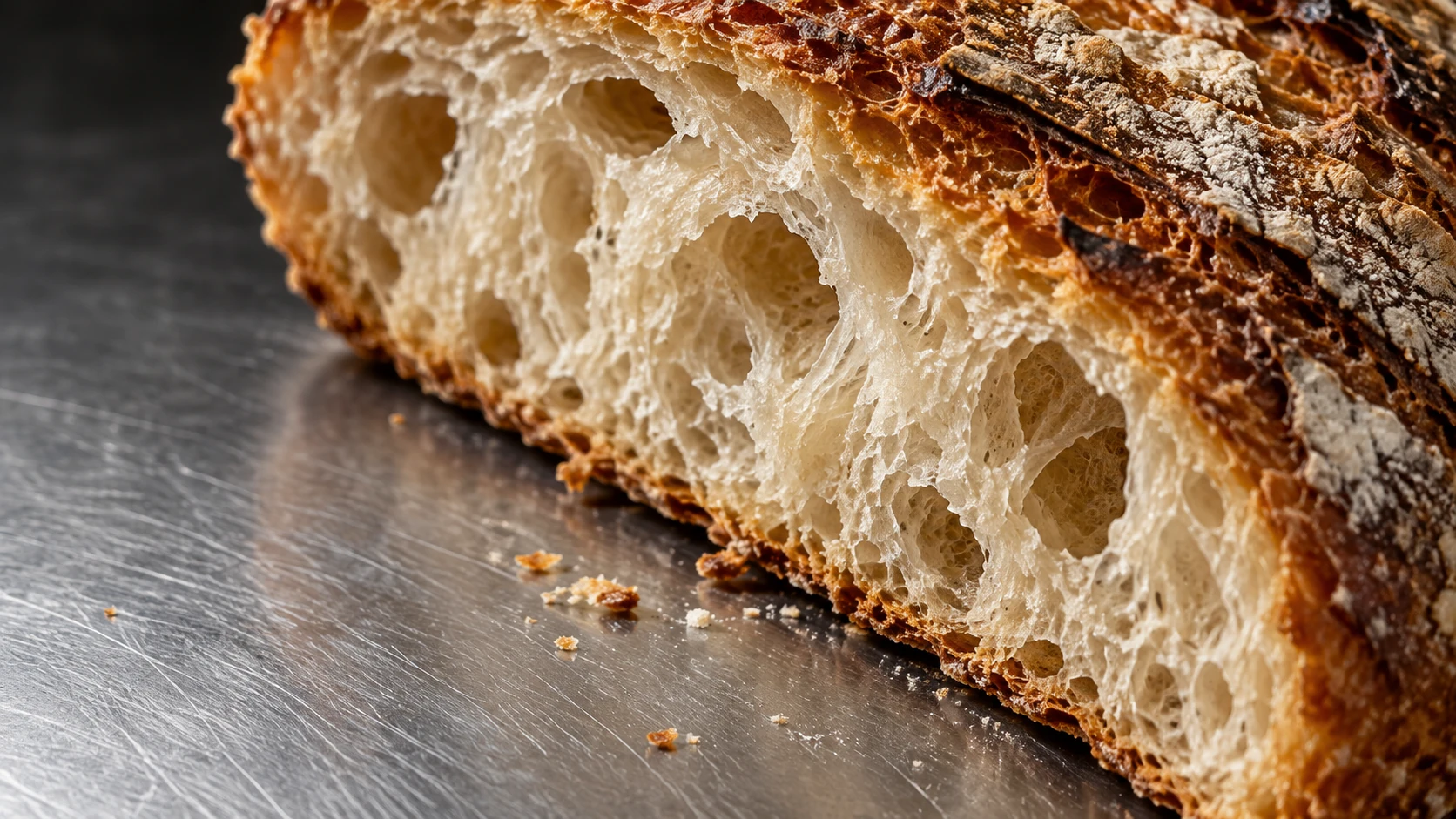
The bread detail offers a separate material study. Its crust ridges, open crumb and flour residue need different treatment from the tart’s fruit. A blanket clarity or sharpening adjustment can make every surface equally hard. Preserve softer areas where the source focus and material call for them.
Adjust colour with the neighbouring surfaces in view
A red ingredient may need a local correction while the plate and filling already look right. Keep those relationships visible as you work. Increasing global saturation can shift the supporting surfaces as well as the food, making the image harder to balance.
Check highlights and shadows within the ingredient, not just its brightest patch. Preserve colour variation that explains form and avoid turning every berry into the same red shape. Compare with the approved source and product references; an attractive colour change is still a change that needs agreement.
Judge the final crop, then the export
Make the main food shape readable at the size the audience will see. Fine crumbs that look useful close up may become visual noise in a small card. A close crop can make the filling and crust clear while removing the plate contact that gives the slice weight. Review both detail and the whole composition.
Inspect the exported file for lost texture, broken highlight detail and distracting sharpening around edges. Compare it with the approved version and retain an editable source for revisions. The goal is selective finishing: enough control to guide attention while leaving the differences that make the food feel physical.