AI fashion & creative production
Reviewing AI fashion imagery: agree the change before regenerating
Make AI fashion feedback easier to act on: identify the frame, protect approved decisions and distinguish a local correction from a new creative direction.
 By Ed McCulloch ·
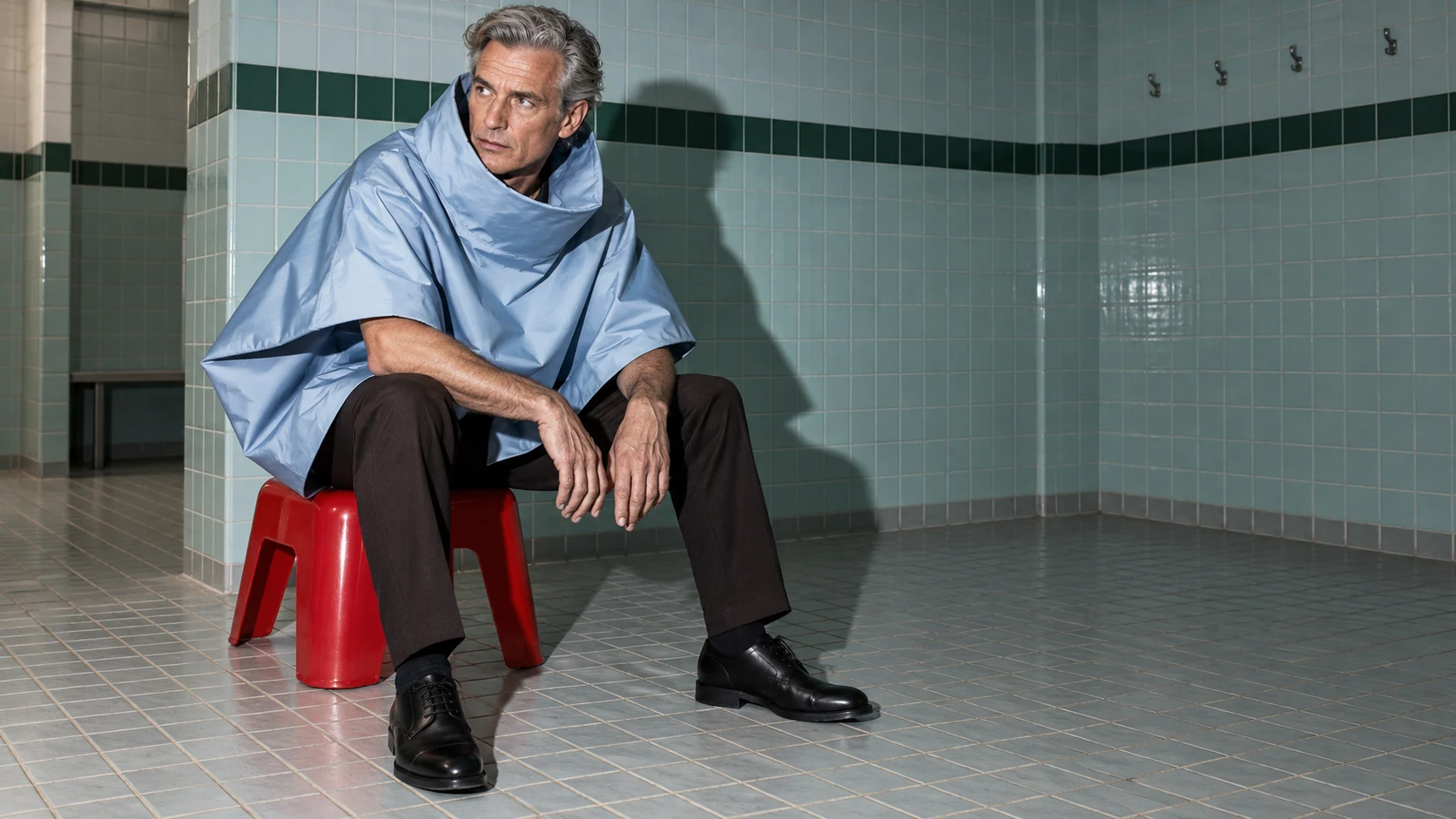
“Make it more premium” can mean several different things: stronger styling, a quieter background, better fabric or a different expression. Without agreeing which decision needs to change, another generation can move the image further from the brief while appearing more polished.
An effective review makes the requested change visible and protects the decisions that already work. For a brand or agency commissioning AI fashion imagery, that gives the next version a clear purpose and the reviewer a fair way to assess it.
Identify the frame and its job
Begin with the exact version and intended placement. A full-length campaign hero and an on-body material insert need different information. Review the hero for silhouette, presence and composition before inspecting a seam at close range. Review the insert for the specific construction or material it is meant to explain.
The blue-taffeta concept is an invented editorial study. Its broad collar, compact seated gesture and tiled setting establish a direction. A useful first review would decide whether that combination serves the campaign, before spending time on small surface corrections. It is not evidence of a real garment or an approved client direction.
Say what should remain fixed
A correction becomes more precise when it names what must survive. For example: keep the casting, camera height, garment colour and seated posture; reduce the brightness of the collar highlight so its folded edge reads more clearly. The reviewer can then compare a defined change against the same visual intention.
Use the approved image and relevant product references alongside the note. For an actual collection, distinguish a styling preference from garment truth: a collar may look more dramatic when enlarged, but that does not make the alteration acceptable. Silhouette, seams, closures and colour should be checked against the supplied evidence.
Describe the problem, not just the preferred tool
“Fix the shoulder” leaves too much open. A more useful note identifies the location and what looks wrong: the seam changes direction at the collar, the rib spacing jumps, or an edge loses thickness. Add a marked crop when a small area is difficult to locate.
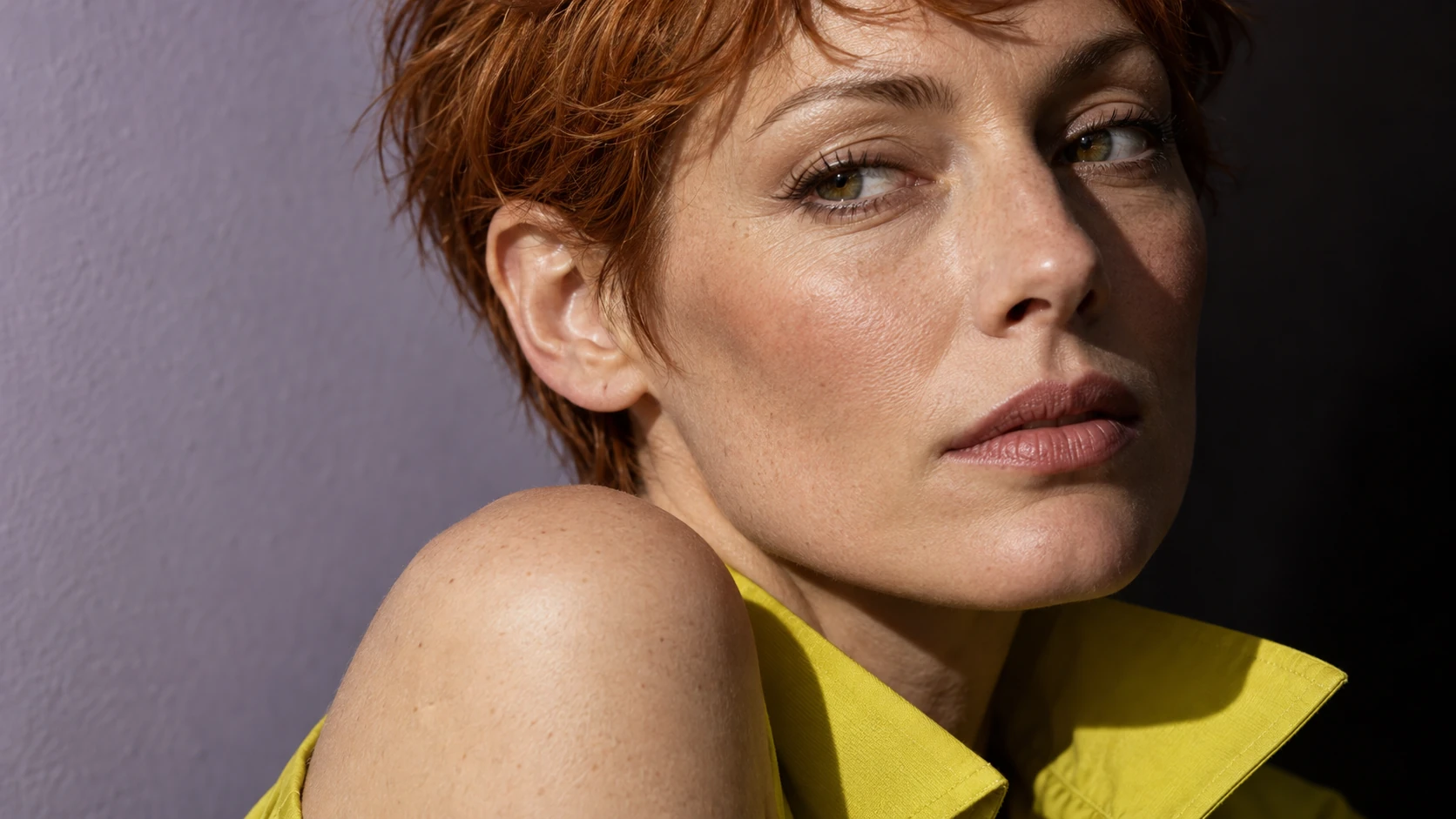
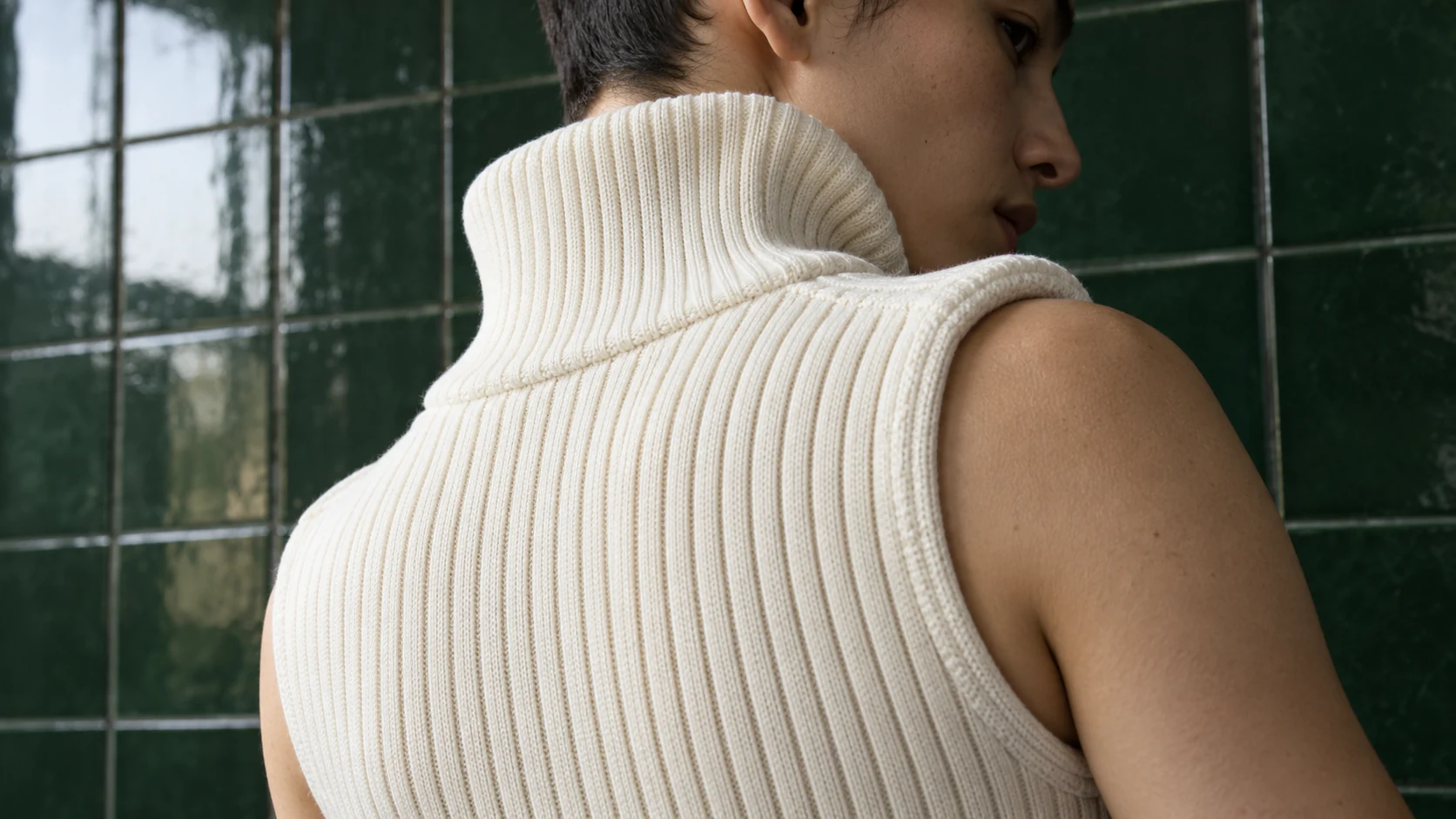
The cream-knit detail provides a separate illustrative example. Its shoulder ridge, ribs and arm opening give a reviewer specific features to discuss. It is a different model and garment, not a second view of the blue outfit, a construction reference or a before-and-after repair. A generated study can explain a review question without proving product accuracy.
Agree whether this is a repair or a new direction
A malformed seam within an agreed frame and a request for a different pose are different production decisions. The former may suit a local repair. The latter can change the garment silhouette, body support, light and crop together. Treating both as tiny amendments makes the next review harder to judge.
The production route should follow the problem. A small tonal correction may suit conventional retouching; changed geometry may need a different source, selective generation or a rebuild. Do not assume a local request will leave every surrounding detail unchanged. Inspect the result and return to the approved reference before accepting it.
Make the next approval easy to compare
Consolidate feedback into one set of notes, with an owner for final decisions. Separate required corrections from optional experiments and prioritise the changes that affect the image’s purpose. Contradictory instructions about pose or garment shape need a decision before more variants are produced.
Return the next version with a short account of what changed and any unresolved limitation. Compare at the intended delivery crop, then check the affected details. If the direction has changed, name the new direction explicitly. Approval should establish a clear next step, rather than merely select the most attractive image from another batch.